

Yashoda Medicity Completes One Year, Combining Advanced Cancer Care, Complex Transplants and Public Health Initiatives
With capacity for over 1,200 beds and advanced clinical facilities, Yashoda Medicity outlines plans to expand specialised services, strengthen healthcare access and build on its first-year milestones From extending technology-enabled critical care support to a public

With capacity for over 1,200 beds and advanced clinical facilities, Yashoda Medicity outlines plans to expand specialised services, strengthen healthcare access and build on its first-year milestones
From extending technology-enabled critical care support to a public hospital to establishing dedicated services for patients with thalassemia and strengthening emergency response, Yashoda Medicity has spent its first year building clinical capabilities alongside initiatives aimed at improving access to specialised healthcare. Inaugurated by the Hon’ble President of India, Smt. Droupadi Murmu, on 26 October 2025, the hospital began operations in the presence of Union Defence Minister Shri Rajnath Singh, Uttar Pradesh Chief Minister Shri Yogi Adityanath, Union Minister of State for Health and Family Welfare Smt. Anupriya Patel, and Uttar Pradesh Deputy Chief Minister and Minister for Medical Education Shri Brajesh Pathak. The hospital builds on the Yashoda Group of Hospitals’ legacy of more than 35 years in healthcare. Its first-year initiatives have spanned advanced treatment, public healthcare collaboration and emergency preparedness.
One of the most significant steps in this direction came in February 2026, when Union Health Minister Shri J.P. Nadda inaugurated the hospital’s AI-enabled E-ICU Command Centre. Through a collaboration with MMG District Hospital, the initiative is designed to extend technology-enabled critical care support to the public healthcare system. Centralised monitoring and specialist oversight can help clinical teams track critically ill patients and respond to changes in their condition, creating a link between the hospital’s critical-care expertise and patient care in a public health facility.
The focus on access to specialised care also informed the establishment of a dedicated Thalassemia Care Centre in May 2026. Bringing together specialist consultations, blood transfusions, iron chelation therapy, genetic counselling and bone marrow transplant evaluation, the centre addresses multiple aspects of care for people living with the inherited blood disorder. Carrier screening, antenatal testing and counselling are also available to support early identification and informed reproductive decisions. During its first year, Yashoda Medicity recorded over 1,20,000 inpatient admissions and outpatient visits, performed more than 4,235 surgeries, including liver and kidney transplants, and treated over 3,000 international patients. Its Yashoda Institute of Cancer Care treated more than 8,000 patients, reflecting the hospital’s growing clinical activity across specialised services.
Dr. P. N. Arora, Chairman & Managing Director, Yashoda Group of Hospitals, said, “The first year of Yashoda Medicity has been about establishing a strong foundation for advanced, comprehensive healthcare, with clinical capabilities, modern infrastructure and specialised expertise in place from the outset. As we enter our second year, our focus is on building on this foundation, expanding access to advanced treatment, further developing our specialised services and ensuring that more patients can benefit from quality healthcare closer to home.”
Alongside developing these services, the hospital has strengthened its capabilities to manage complex clinical conditions across multiple specialities, including neurosciences, organ transplantation, oncology, cardiac sciences and critical care. Its multidisciplinary approach brings together specialist expertise, advanced surgical interventions and precision-based cancer treatments to address a wide range of complex medical needs. The hospital has also achieved NABH accreditation, underscoring its focus on healthcare quality and patient safety.
Beyond care delivered within the hospital, Yashoda Medicity has also focused on improving the ability of people outside clinical settings to respond to medical emergencies. In September 2026, it launched ‘Rep Se Rescue Tak – Train Hard. Respond Faster.’ in conjunction with World Heart Day, to strengthen cardiac emergency preparedness across gyms and fitness centres in Delhi-NCR. The campaign brought together cardiologists, emergency medicine specialists, fitness professionals and fitness influencers to promote cardiac health awareness and safer workout environments. Through the associated Yashoda Certified Gym & Trainer Initiative, more than 70 fitness professionals completed training in recognising suspected cardiac arrest, activating emergency medical assistance and initiating cardiopulmonary resuscitation (CPR). Live demonstrations and hands-on simulations helped participants practise how to respond while awaiting professional medical assistance.
Dr. Upasana Arora, Managing Director, Yashoda Group of Hospitals, added, “The true measure of a hospital’s growth lies in its impact on people’s health. By improving access to specialised treatment, strengthening public healthcare linkages and supporting early intervention, we aim to address critical gaps in care. Our focus remains on delivering patient-centred care, building stronger healthcare partnerships and ensuring that more people can access timely, quality treatment closer to home.”
The hospital extended this emphasis on emergency response to trauma management in October 2026. In collaboration with the Indian Society for Trauma and Acute Care (ISTAC), it trained nearly 100 participants, including police personnel, frontline responders and community members, in trauma first response. The programme covered scene safety, airway management, bleeding control, safe transportation and emergency rescue, equipping participants with practical skills to respond in the critical period before patients reach definitive medical care.
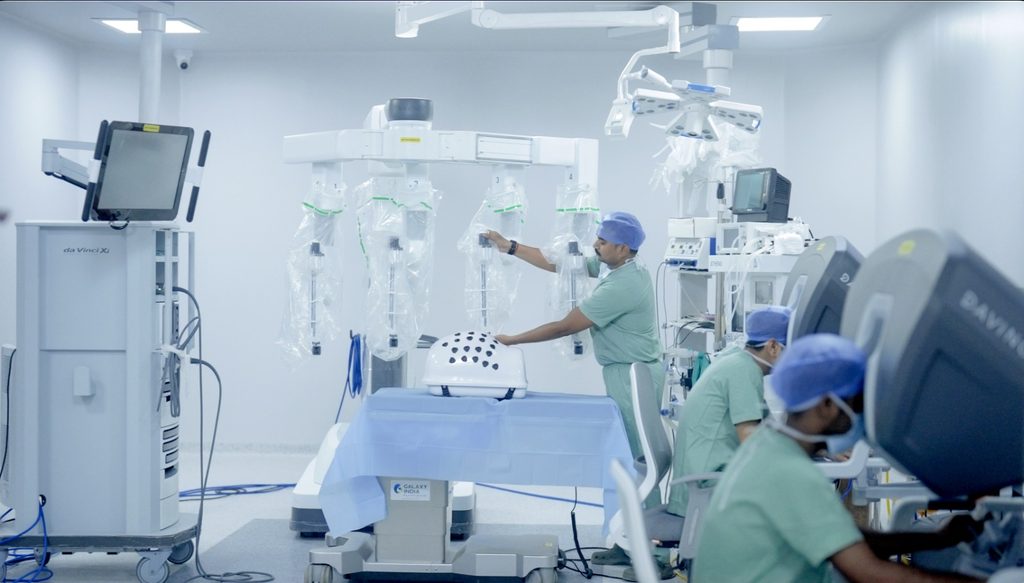
Yashoda Medicity’s clinical infrastructure supports these initiatives, with a planned capacity of over 1,200 beds, 252+ modular ICU beds, 22 modular operation theatres, 10+ endoscopy suites, and 300+ expert doctors across 65+ super-specialities and 12 Centres of Excellence. Its specialised institutes cover cancer care, cardiac sciences, neurosciences, internal medicine, children’s healthcare, emergency and trauma care, renal transplantation, robotic and bariatric surgery, gastroenterology, respiratory medicine, orthopaedics, and spine and pain management. Advanced capabilities include the Da Vinci Xi Robotic Surgical System and cancer-treatment technologies such as Elekta Unity MR-Linac, ETHOS Therapy with HyperSight and IDENTIFY, EDGE with HyperArc and ExacTrac Dynamic, and BRAVOS, supporting precision radiotherapy, adaptive radiation therapy and radiosurgery.
As Yashoda Medicity enters its second year, it will build on the clinical capabilities established so far, further develop specialised services, and strengthen access to advanced treatment. The next phase will seek to translate its infrastructure, public healthcare partnerships and emergency-preparedness initiatives into tangible benefits for patients across Ghaziabad, Uttar Pradesh and the wider NCR, while continuing to support international patients seeking specialised medical care in India.