
WHO South-East Asia Region Applauds India’s National HPV Vaccine Launch as Major Public Health Milestone
The World Health Organization South-East Asia Regional Office has congratulated the Government of India on the national launch of its Human Papillomavirus (HPV) vaccination programme, describing it as a landmark step in the fight against

The World Health Organization South-East Asia Regional Office has congratulated the Government of India on the national launch of its Human Papillomavirus (HPV) vaccination programme, describing it as a landmark step in the fight against cervical cancer and a significant contribution to regional and global cancer prevention efforts.
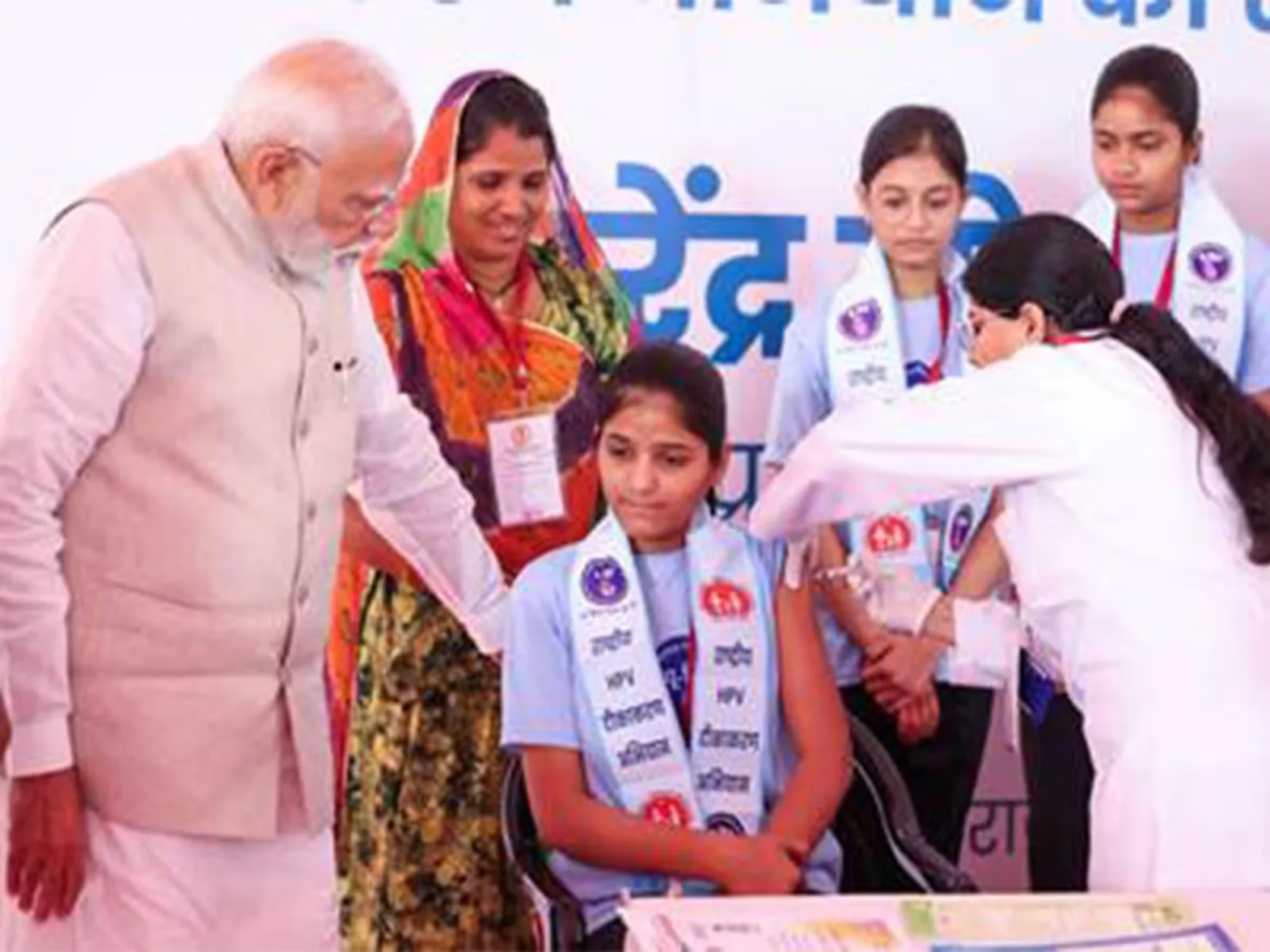
Prime Minister Narendra Modi formally inaugurated the nationwide HPV vaccination campaign from Ajmer, Rajasthan, marking the introduction of free, government-supported HPV immunisation for adolescent girls aged 14 years across the country. The initiative aims to protect young women before exposure to high-risk HPV virus strains that are responsible for the majority of cervical cancer cases, thereby reducing disease burden and advancing preventive healthcare outcomes.
Dr. Catharina Boehme, Officer-in-Charge of WHO’s South-East Asia Region, praised India’s decisive action, noting that the inclusion of the HPV vaccine in the national immunisation programme will have far-reaching benefits not only for India’s population but for the broader region, where cervical cancer remains a leading public health challenge. “This landmark step, led at the highest level of government, reflects India’s strong commitment to protecting adolescent girls from cervical cancer,” Dr. Boehme said.
With the launch, India joins nine of the 10 countries in the WHO South-East Asia Region that now include HPV vaccination in their national immunisation schedules, underscoring the country’s alignment with the WHO global targets for cervical cancer elimination by 2030—which aim to vaccinate 90 percent of girls by age 15, screen 70 percent of women for cervical disease, and ensure 90 percent of women with pre-cancer or invasive cancer receive appropriate treatment.
India’s nationwide HPV vaccination drive is being implemented through designated government health facilities, including primary health centres, community and district hospitals, and medical colleges. The free, voluntary programme is part of the broader National Health Mission and represents a major preventive healthcare intervention against cervical cancer, the second most common cancer among women in the country.
The WHO South-East Asia Region’s commendation highlights India’s leadership in preventive health and reinforces global efforts to curb HPV-related cancers through vaccination, early detection, and comprehensive treatment strategies.