

India Strengthens Ebola Surveillance at Airports, Issues Health Advisory for Travellers from African Nations
India has intensified Ebola surveillance measures at international airports and issued a fresh public health advisory for travellers arriving from African countries affected by the ongoing Ebola outbreak, including the Democratic Republic of Congo (DRC),

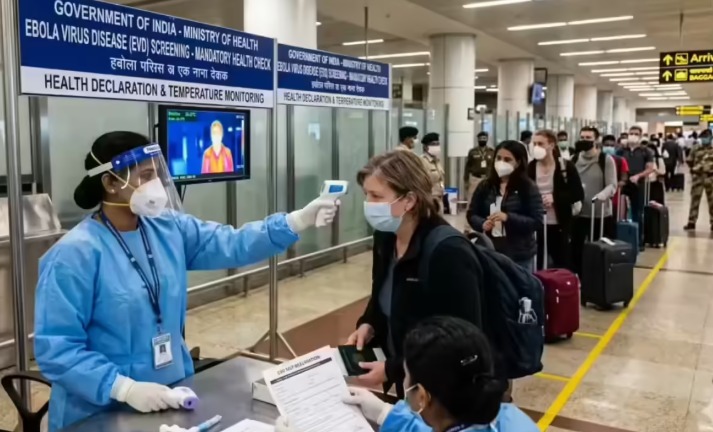
India has intensified Ebola surveillance measures at international airports and issued a fresh public health advisory for travellers arriving from African countries affected by the ongoing Ebola outbreak, including the Democratic Republic of Congo (DRC), Uganda, and South Sudan.
The Directorate General of Health Services (DGHS) has directed travellers from affected regions to immediately report to airport health officers if they experience symptoms such as fever, vomiting, diarrhoea, weakness, headache, sore throat, muscle pain, or unexplained bleeding. Health authorities have also enhanced screening protocols and surveillance systems at major international airports to prevent potential imported infections.
The precautionary measures come after the World Health Organization (WHO) declared the ongoing Ebola outbreak a Public Health Emergency of International Concern (PHEIC) following rising suspected cases and deaths linked to the rare Bundibugyo strain of the virus in parts of Africa.
According to recent international health estimates, more than 300 suspected Ebola cases and nearly 90 suspected deaths are currently under investigation in affected regions. Ebola is considered one of the world’s deadliest viral diseases, with historical fatality rates ranging from 25% to 90% depending on the outbreak and healthcare response.
Indian health authorities have advised healthcare facilities and airport medical units to remain alert for symptomatic travellers and strengthen infection-control protocols, isolation preparedness, and rapid response mechanisms.
Officials emphasized that Ebola is not an airborne disease like COVID-19 and primarily spreads through direct contact with infected bodily fluids or contaminated materials. However, global health experts continue to stress the importance of early detection, rapid isolation, contact tracing, and public awareness to contain outbreaks effectively.
The latest advisory reflects India’s proactive public health preparedness strategy aimed at strengthening border surveillance, preventing cross-border transmission risks, and ensuring rapid emergency response amid evolving global health concerns.