
World MS Day 2026: Landmark 10-Point Declaration Calls for Greater Recognition of Invisible Disabilities in India
In a significant move towards strengthening disability inclusive healthcare and social protection systems, policymakers, Members of Parliament, healthcare experts, insurance representatives, disability rights advocates, and persons living with Multiple Sclerosis (MS) have adopted a landmark

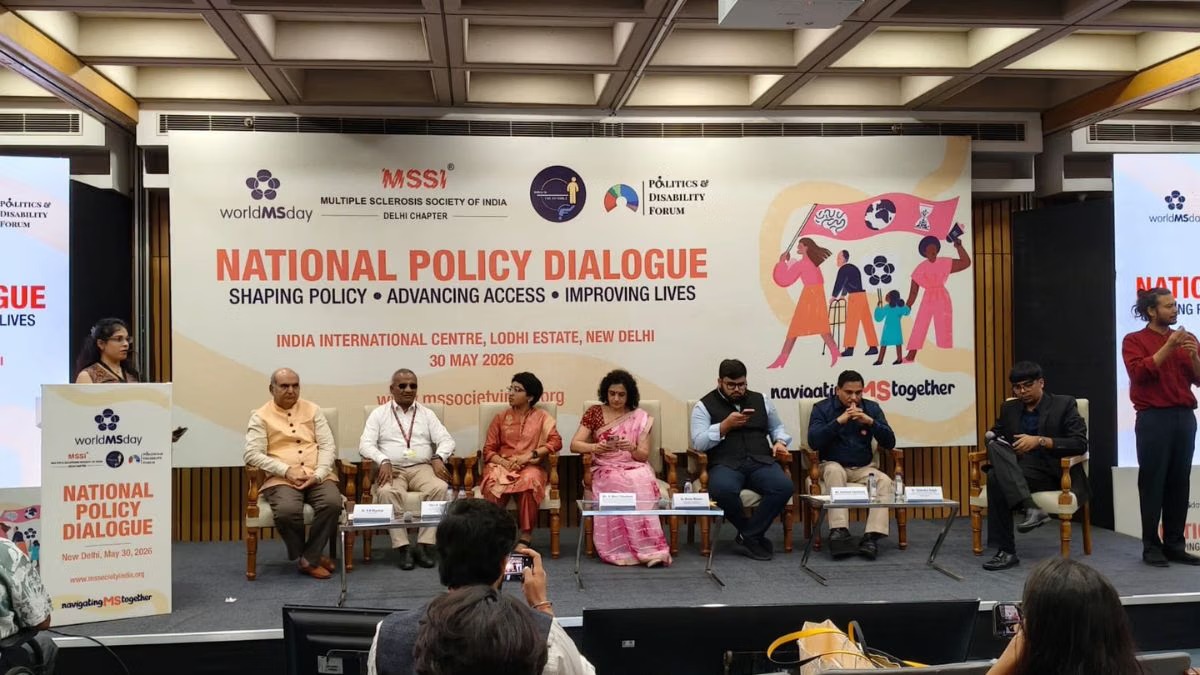
In a significant move towards strengthening disability inclusive healthcare and social protection systems, policymakers, Members of Parliament, healthcare experts, insurance representatives, disability rights advocates, and persons living with Multiple Sclerosis (MS) have adopted a landmark 10 point Declaration on Invisible Disabilities and Gender during a National Policy Dialogue held on the occasion of World MS Day 2026.
Organised by the Multiple Sclerosis Society of India (MSSI), Delhi Chapter, in partnership with Believe in the Invisible (BITI) and the Politics & Disability Forum, the dialogue was held at the India International Centre under the theme “Shaping Policy. Advancing Access. Improving Lives.”
The declaration calls for urgent reforms in disability certification, healthcare access, insurance coverage, workplace inclusion, social protection, and long term neurological care for individuals living with invisible disabilities such as Multiple Sclerosis.
Multiple Sclerosis is a chronic autoimmune neurological condition that affects the brain and spinal cord. Experts estimate that nearly 1.5 to 2 lakh people in India are living with the disease. Common symptoms include fatigue, cognitive impairment, chronic pain, mobility challenges, visual disturbances, and bladder dysfunction many of which are not outwardly visible, often leading to delayed diagnosis and limited access to support services.
Stakeholders at the dialogue highlighted the need for greater recognition of invisible disabilities within public policy frameworks. They emphasized that many patients continue to face difficulties in obtaining disability certification, accessing insurance coverage, securing workplace accommodations, and receiving long-term rehabilitation support despite experiencing significant functional limitations.
Healthcare experts also stressed the importance of integrating neurological and disability care into India’s broader healthcare agenda, particularly as non communicable and neurological disorders continue to rise.
Advocates believe the 10 point declaration could serve as a roadmap for future policy reforms aimed at improving quality of life, healthcare access, financial protection, and social inclusion for people living with Multiple Sclerosis and other invisible neurological conditions.
The initiative marks one of the most comprehensive policy discussions on invisible disabilities in India and reflects growing efforts to build a more inclusive healthcare and social support ecosystem for individuals whose disabilities often remain unseen but deeply impactful.