

3D-Printed Contact Lenses Show Early Promise for Next Generation Vision Care, Researchers Prepare Human Testing
Researchers have developed 3D-printed contact lenses that have shown encouraging results in early laboratory studies, marking a significant step toward the future of personalized vision care. While the technology is still in the experimental stage,

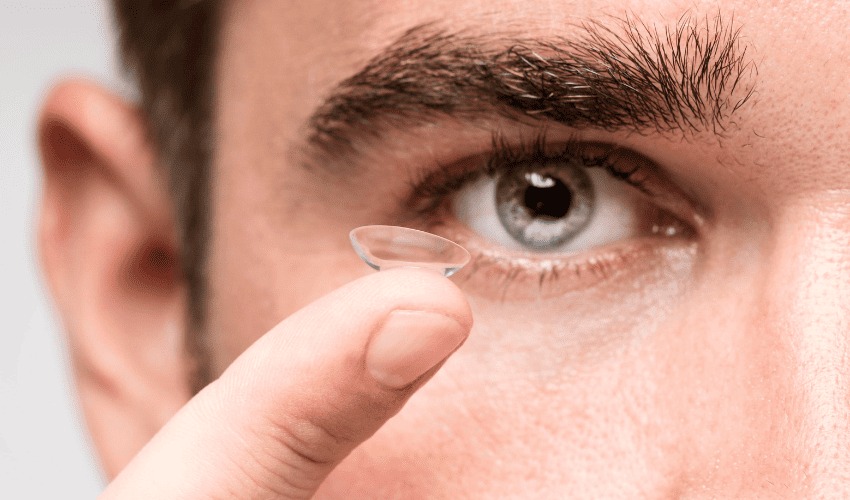
Researchers have developed 3D-printed contact lenses that have shown encouraging results in early laboratory studies, marking a significant step toward the future of personalized vision care. While the technology is still in the experimental stage, scientists believe it could pave the way for faster, more customized and cost effective contact lens manufacturing.
The lenses have so far been tested only in laboratory experiments, where researchers evaluated their structural integrity, optical performance and biocompatibility. The team has also filed a provisional patent for a newly developed hydrophilic silicone material, which combines oxygen permeability with improved moisture retention two critical properties for comfortable and safe contact lens wear.
The innovative material has been specifically designed for 3D printing, enabling rapid production of customized lenses tailored to an individual’s eye shape and vision requirements. Researchers are now preparing to begin preclinical and in-eye testing to assess the lenses’ safety, comfort and long term performance before progressing to human clinical trials.
Unlike conventional manufacturing methods, 3D printing has the potential to simplify production, reduce manufacturing waste and enable on-demand fabrication of highly personalized medical devices. Experts believe the technology could eventually benefit patients requiring specialty lenses for conditions such as keratoconus, irregular corneas and other complex vision disorders.
According to the World Health Organization (WHO), at least 2.2 billion people worldwide live with vision impairment or blindness, with nearly 1 billion cases being preventable or treatable through timely intervention. Innovations in ophthalmic biomaterials and additive manufacturing are expected to play an increasingly important role in improving access to personalized eye care.
Researchers cautioned that the technology remains at an early research stage and has not yet been tested in humans. They emphasized that additional laboratory validation, animal studies and clinical trials will be required before the lenses can be considered for regulatory approval and commercial use. If successful, the innovation could represent a major advancement in next generation ophthalmic devices and precision eye care.