
Health Ministry Observes World Patient Safety Day 2026 with Focus on Safe NCD Care
The Union Ministry of Health and Family Welfare observed World Patient Safety Day 2026 with a strong focus on improving the safety and quality of care for people living with noncommunicable diseases (NCDs). Observed every year

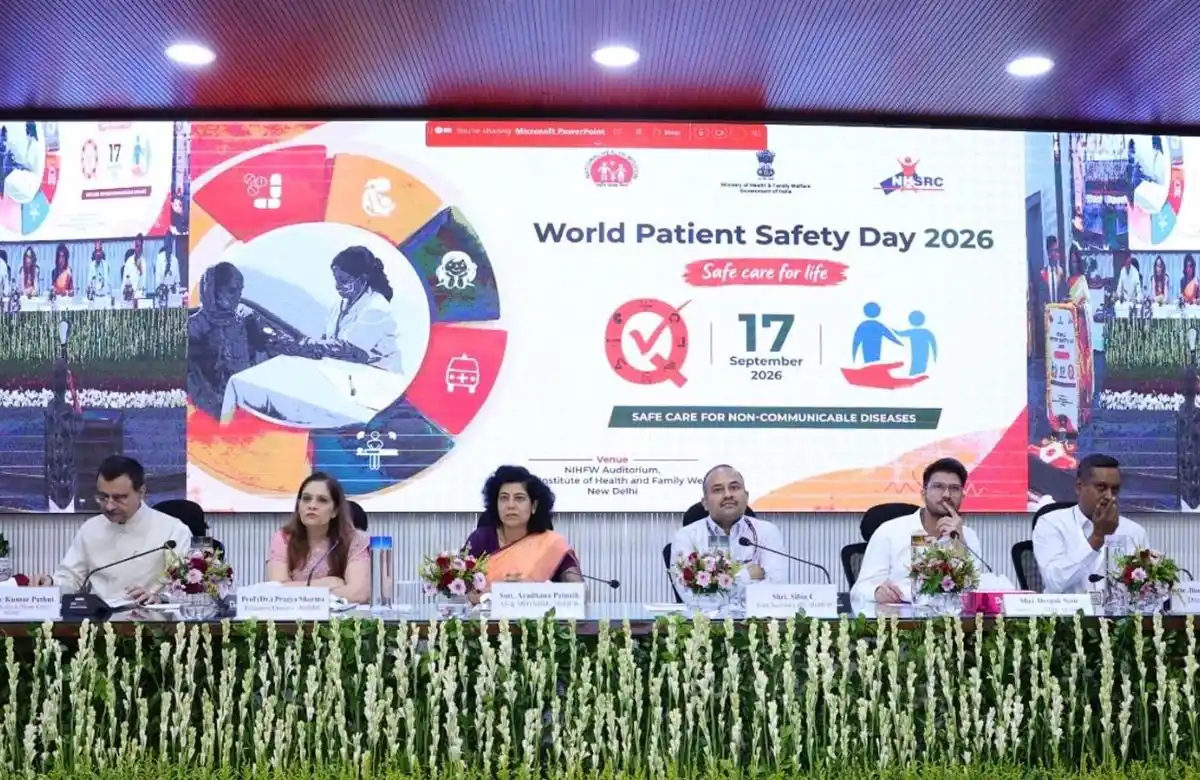
The Union Ministry of Health and Family Welfare observed World Patient Safety Day 2026 with a strong focus on improving the safety and quality of care for people living with noncommunicable diseases (NCDs).
Observed every year on September 17, World Patient Safety Day 2026 focuses on the theme “Safe Care for Noncommunicable Diseases (NCDs)”, with the campaign slogan “Safe Care for Life!” The observance brought together healthcare professionals, policymakers, public health experts, quality managers and representatives from States and Union Territories.
Why Safe NCD Care Is Important
NCDs such as cardiovascular diseases, diabetes, cancer and chronic respiratory diseases require continuous healthcare, often over many years. Patients may undergo repeated screening, diagnosis, medication, treatment, referrals and follow-up.
Patient Safety Across the Care Journey
Safety risks can occur at different stages of NCD care. These may include delayed diagnosis, medication errors, communication gaps, unsafe referrals and interruptions in continuity of care.
The World Health Organization (WHO) has highlighted the need for healthcare systems to strengthen safe diagnosis, medication practices, care transitions and patient engagement as part of the 2026 campaign.
Health Ministry Highlights Quality Healthcare
During the national observance, the Ministry emphasised that patient safety should be integrated across the entire healthcare system rather than treated as an isolated activity.
The focus includes prevention, early detection, diagnosis, treatment and long-term management of NCDs. Strengthening referral systems and ensuring continuity of care were also highlighted as important components of safer healthcare delivery.
NQAS Certification Target
The Ministry called upon States and Union Territories to accelerate quality-improvement initiatives. It outlined a roadmap towards 100% National Quality Assurance Standards (NQAS) certification of Ayushman Aarogya Mandir–Sub Health Centres by March 2027, followed by certification of Ayushman Aarogya Mandir–Primary Health Centres.
NQAS certification is intended to support consistent standards of quality and patient safety across public healthcare facilities.
National Patient Safety Pledge
The national programme also included the administration of the National Patient Safety Pledge, reinforcing the commitment of healthcare stakeholders to safer and higher-quality healthcare.
Technical sessions addressed important areas including patient safety in NCD care, medication safety, digital health, clinical pathways and the management of patients with multiple health conditions.
Also Read: ACTIVITIES OF PATIENT SAFETY AND ACCESS INITIATIVE OF INDIA FOUNDATION
State-Level Patient Safety Initiatives
The event also showcased healthcare initiatives from different states. Examples included Jharkhand’s geriatric diabetic and hypertension screening model, Kerala’s Hridhyaragam initiative and Rajasthan’s SETU online referral application.
These initiatives demonstrate how state-level innovation can support prevention, early detection, referrals and continuity of care.
Role of Digital Health in Patient Safety
Digital health technologies can contribute to safer NCD care by improving information sharing, clinical coordination and referral processes. Digital tools can also support healthcare professionals in maintaining patient information and coordinating care between different facilities.
Medication safety remains particularly important because many people with NCDs require long-term treatment and may use multiple medicines.
Patients as Partners in Safe Care
Patients and caregivers also have an important role in improving safety. Understanding diagnoses, following prescribed treatment, keeping track of medicines and communicating concerns with healthcare professionals can support safer care.
Healthcare providers, meanwhile, can strengthen patient safety through clear communication, accurate diagnosis, appropriate medication practices and timely follow-up.
Strengthening Patient Safety in India
The World Patient Safety Day 2026 observance highlights India’s continuing efforts to improve healthcare quality and safety. Initiatives such as NQAS and the National Patient Safety Implementation Framework provide a foundation for strengthening quality standards across healthcare facilities.
As the burden of NCDs continues to require sustained healthcare attention, integrating patient safety into every stage of care can help build more coordinated and reliable healthcare services.