
NMC Bans AI-Generated Testimonials and Fake Medical Promotions by Doctors, Hospitals
NEW DELHI: The National Medical Commission (NMC) has introduced stricter ethical rules governing the advertising and promotion of medical services in India. Under the new guidelines, doctors and hospitals have been prohibited from using artificial

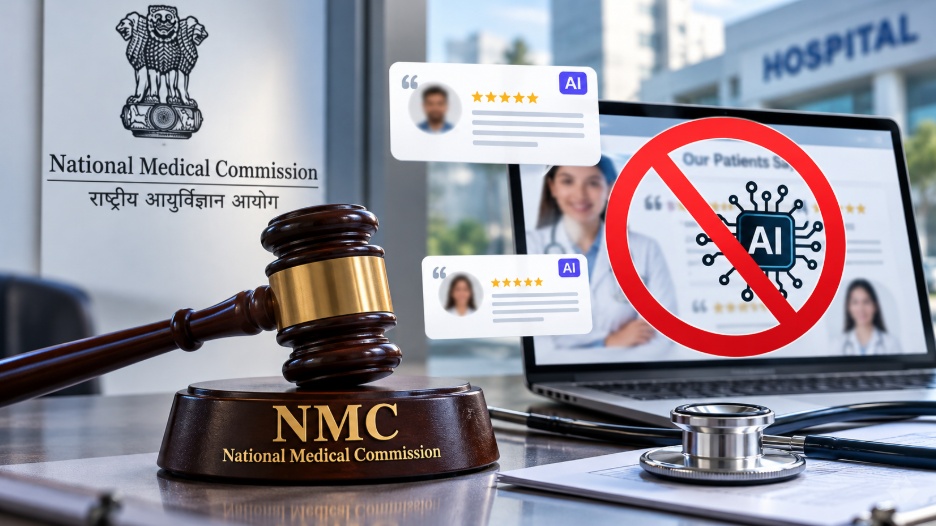
NEW DELHI: The National Medical Commission (NMC) has introduced stricter ethical rules governing the advertising and promotion of medical services in India. Under the new guidelines, doctors and hospitals have been prohibited from using artificial intelligence to create fake patient testimonials, synthetic clinical outcomes, promotional endorsements or other content that could mislead the public.
The guidelines, which take effect immediately, aim to ensure that medical advertising remains factual, transparent and ethically responsible. The NMC has also placed restrictions on practices such as manipulating online search rankings, making unsupported claims about medical services and using promotional strategies that could encourage unnecessary consultations or treatments.
AI Cannot Be Used to Create Fake Patient Experiences
One of the major provisions of the new guidelines relates to the use of artificial intelligence in medical promotion. Doctors and hospitals cannot use AI tools to manufacture patient experiences, testimonials, voices, treatment results or endorsements.
The rules also prohibit the publication of AI-generated material that gives an inaccurate impression about the quality, effectiveness or nature of a medical service. Such practices could create unrealistic expectations among patients and influence their healthcare decisions on the basis of information that cannot be independently verified.
The NMC’s move comes as AI-generated content becomes increasingly common across websites, social media platforms and digital advertising.
Restrictions on Misleading Medical Claims
The new ethical framework also addresses exaggerated or unverifiable claims made by medical professionals and healthcare institutions.
Doctors and hospitals cannot promote themselves using terms such as “best”, “number one”, “most trusted” or similar superlative claims when such statements cannot be substantiated. Claims involving guaranteed cures or a “100% success rate” are also restricted.
According to the guidelines, healthcare communication should provide patients with accurate information rather than create unrealistic expectations about treatment results.
Paying for Better Search Rankings Prohibited
The NMC has also taken note of the growing importance of online visibility for doctors and hospitals. Healthcare professionals are not permitted to pay for manipulating rankings on search engines, applications or other platforms in a way that gives them an unfair promotional advantage.
The guidelines seek to distinguish genuine digital visibility from practices that could mislead patients into believing that a particular doctor or hospital is superior solely because of its online ranking.
No Patient-Based Payments to Influencers or Agencies
Doctors and hospitals have also been restricted from entering promotional arrangements where payments to influencers, advertising agencies or online platforms are connected to bringing or procuring patients.
The provision is intended to prevent healthcare marketing from becoming dependent on patient acquisition incentives. Medical decisions, the NMC framework emphasises, should be based on healthcare needs rather than promotional campaigns designed to generate patient numbers.
Discounts and Promotional Offers Face Restrictions
The guidelines further restrict certain promotional schemes in healthcare. Doctors and hospitals cannot use limited-time discounts, coupons, gift packages or rewards when such offers could encourage people to seek consultations or medical services unnecessarily.
The NMC’s approach reflects the view that healthcare should not be promoted in the same manner as ordinary consumer products, where discounts and promotional offers are commonly used to drive sales.
Social Media Can Still Be Used for Health Education
The new rules do not completely prevent doctors from maintaining a presence on social media. Medical professionals can continue using digital platforms to share factual and educational information about health and healthcare.
However, such communication should remain educational and non-promotional. Doctors are expected to ensure that information shared online does not become misleading advertising or an attempt to attract patients through exaggerated medical claims.
Patient Photographs Require Consent
The NMC has also strengthened safeguards surrounding the use of patient photographs and treatment-related visual material.
Patient photographs should not be used without appropriate consent and safeguards. The guidelines also restrict the use of testimonials, before-and-after photographs and treatment-success claims where such content may mislead patients or create unrealistic expectations.
This is particularly important in the digital environment, where photographs and patient stories can quickly reach large audiences through websites and social media platforms.
Penalties for Violating the Guidelines
The NMC has prescribed a graded disciplinary framework for violations of the ethical advertising rules.
A first violation can result in a warning along with mandatory ethics training. A second violation may attract censure and a monetary penalty. For a third violation, a medical professional may face suspension ranging from three to six months.
Serious violations can result in suspension for six to 12 months. Repeated or particularly serious breaches may lead to removal from the medical register for a period ranging from one to three years.
What the New NMC Rules Mean for Digital Healthcare Marketing
The new guidelines are significant for doctors, hospitals and healthcare brands that rely heavily on websites, search engines and social media for public communication.
With AI tools now capable of generating realistic text, images, voices and testimonials, distinguishing genuine patient experiences from synthetic content can be difficult. The NMC’s restrictions establish clearer boundaries for how artificial intelligence can be used in healthcare communication.
For medical professionals, the emphasis will now be on factual information, transparent communication and responsible use of digital platforms rather than exaggerated promotional claims.
The guidelines also highlight the importance of maintaining patient trust in an increasingly digital healthcare environment. While doctors and hospitals can continue educating the public online, promotional content must not cross ethical boundaries or provide patients with misleading impressions about treatments, outcomes or medical expertise.
AI and Healthcare Advertising Under Greater Scrutiny
The NMC’s latest move signals a broader shift towards greater accountability in digital healthcare communication. As artificial intelligence becomes more accessible, healthcare organisations may increasingly use AI for content creation and communication.
However, the new ethical framework makes it clear that technology cannot be used to manufacture patient experiences, create fake endorsements or present unverifiable medical outcomes as genuine.
For patients, the guidelines are intended to provide greater protection against misleading healthcare promotions. For doctors and hospitals, they establish the need to review their digital marketing practices and ensure that online communication complies with professional ethical standards.
The immediate implementation of these guidelines means healthcare professionals and institutions will need to exercise greater caution when using AI, social media, advertising agencies and digital platforms to promote their services.

