
MEDTECH: SEEKING GLOBAL ACCEPTANCE BUT HOW?
The Indian medtech sector, touted to be a sunrise sector and being exhorted to help reduce India’s huge dependence on imports, is quite focussed on global acceptance.However there are a number of issues about the

The Indian medtech sector, touted to be a sunrise sector and being exhorted to help reduce India’s huge dependence on imports, is quite focussed on global acceptance.
However there are a number of issues about the pathway to global acceptance which are not understood – either by the government or by the industry which contributes to the absence of a cohesive strategy and promotes confusion.
So here are some explanations which would help understand the issues involved.
Global acceptance
The ideal situation is that the products as regulated in India are accepted globally.
The first question therefore is – are Medical Devices Rules, 2017 globally equivalent.
The answer has to be no!
Why?
Because:
a) MDR requires compliance to BIS standards not ISO/IEC standards which are global standards as first priority and
b) the QMS prescribed vide Fifth schedule is based on the older version, ISO 13485:2003, and hence not equivalent to current ISO 13485:2016.
There may be other deviations from global best practices like limiting use of Notified Bodies (NBs) to only class A and B devices. Extending their role not only provides more resources, it also promotes job creation, However the National Accreditation Board for Certification Bodies (NABCB) needs to exercise a more rigorous oversight over NBs to enhance trust in them.
Therefore, there has to be an alternate system of certification which meets global standards and can be presented to foreign regulators for acceptance.
ICMED 13485 Plus was developed by the Quality Council of India (QCI) to address this gap – but unfortunately neither industry has realized its utility as a possible replacement of USFDA approval or CE mark which tenderers specify in India with locally available certification nor government has been able to understand that it can be leveraged in free trade negotiations to secure acceptance of certified medical devices abroad.
MRAs
MRAs mean mutual recognition agreements and are bandied about a lot when we talk about Free Trade Agreements (FTAs) without understanding what they need.
What does MRA mean?
It means ideally that each country recognizes other country’s regulations as equivalent and accepts the products as regulated.
As has been shown above, MDR 2017 is unlikely to be acceptable given its not based wholly on international standards.
Fortunately, MRAs do not require that domestic regulations should be equivalent to trading partner’s regulations.
If we can demonstrate that we can manufacture, test and certify medical devices to the regulatory requirements of a foreign country, and the foreign country can show the same vice versa, we can still sign an MRA.
Good examples are MRAs signed as far back as 2005 with Singapore in telecom and electrical/electronics sectors. We did not even have regulations in telecom then – now of course we have telecom regulations in place.
There are also examples of one-sided recognitions – where the foreign regulators have recognized Indian export certifications possibly because they are not exporting to India. Good examples are the seafood certification by Export Inspection Council (EIC) and organic certification by APEDA, both of which have been recognized by the European Commission among other countries.
But in case of medical devices, the trading partners are also interested in Indian market so the MRAs would be the preferred course.
Participation in international arrangements
In some sectors, there are international arrangements available that facilitate acceptance of either products or testing, audit etc abroad. Medtech sector has such arrangements available. India joined the International Medical Device Regulators Forum (IMDRF) in 2022 — the premier global regulatory harmonisation body. IMDRF’s Medical Device Single Audit Program (MDSAP) is particularly powerful: one audit simultaneously accepted by Canada, USA, Brazil, Japan, and Australia. India must evaluate MDSAP participation and work toward NABCB-accredited bodies being recognised as MDSAP auditing organisations — multiplying market access for Indian medical devices and IVD manufacturers at significantly reduced compliance cost.
Procurement driven acceptance
WHO operates a pre qualification (WHO PQ) programme which covers a number of products – pharma, vaccines and IVDs among them. For IVD exports to Africa, Southeast Asia, and other LMIC markets, it is the gold standard — recognised by UNICEF, the Global Fund, PEPFAR, and 100+ national health programmes. India has clear competitive strengths in priority WHO PQ disease categories: HIV, Hepatitis B/C, Malaria, Dengue, and TB. Yet very few Indian IVD manufacturers hold WHO PQ status, due to limited awareness, high application costs, and absence of a structured government facilitation mechanism.
Harmonization of standards
This is another favourite, much used expression – that we should harmonize our standards (meaning domestic regulations) with international standards. This of course is the best course and highly recommended. Incidentally, international standards means not only for products but also for the manner of demonstrating compliance – which means conformity assessment.
But the reality is that across sectors, we have found it difficult to adopt international standards in our regulations due to challenges primarily faced by small and micro sectors, be it pharma or food or even gold jewellery where not that purity is not meeting global standards – it is – but the assaying centres are not complying with international standard i.e. not accredited and hence not acceptable.
But as has been demonstrated earlier, harmonization of standards is not essential for signing MRAs and there are options available to seek acceptance of local certification abroad.
Leveraging accreditation
Once we recognize the importance of conformity assessment procedure, as it is called in WTO parlance, the important role that accreditation plays in international trade should become obvious.
Most stakeholders including the industry as well as government do not realize that India’s accreditation system is ranked 7th globally in an annual study conducted by a German organization – pl see report on Global Quality Infrastructure Index at – only USA, 3 European countries, Mexico and Indonesia are better placed than India.
Our accreditation bodies, now 5 in number (NABCB, NABL, QAI, FDAS, IQAS), are signatories to the mutual recognition arrangements of the Global Accreditation Cooperation Inc (GACI) relating to testing, ISO 13485 certification and product certification, as applicable, which are relevant to medtech sector.
Therefore, we should be leveraging accreditation in FTAs to our benefit.
We can easily seek acceptance of our test reports, ISO 13485 certificates and product certification, if its based on international standards (ICMED 13485 Plus is), provided all are accredited by the Indian accreditation bodies.
BIS certification is not mentioned above because unfortunately, BIS refuses to get accredited and therefore even if medical devices are based on international standards and certified by it, they would not be acceptable abroad. Same case as in hallmarking of gold jewellery where it does not require assaying centres to be accredited and therefore hallmarking is not acceptable aboard despite gold purity meeting global standards. BIS actually does a disservice to the industry, nay the country, by its rigid, indefensible attitude. Fortunately, medtech sector is free from travails of QCOs.
Even the Directorate of Legal Metrology, which incidentally is in the same Ministry as BIS, that is Consumer Affairs, has taken NABCB accreditation to secure global equivalence through their international body, OIML, and certificates issued by them for measuring instruments are globally acceptable. Including some medical devices like thermometers!
India should therefore be seeking power to designate labs and certification bodies in India for the purpose of testing or certifying for say Canadian or UK regulations as we did in case of MRAs with Singapore.
Industry laments that there is no lab in India recognized under ASCA – we should actually be seeking recognition of Indian labs accredited by our accreditation bodies under ASCA to reduce cost even further as part of our negotiations with USA.
India and USA in the Joint Statement on the United States-India Trade Policy Forum in Jan 2024 stated thus:
“7. The Ministers agreed to establish a pathway in which India and the United States will mutually recognize results from accredited conformity assessment bodies utilizing International Laboratory Accreditation Cooperation (ILAC) and International Accreditation Forum (IAF) mutual recognition arrangements (MRAs), on a bilateral basis whenever possible.“
This means acceptance of GACI MRAs which should be leveraged by India to secure acceptance of Indian labs under USFDA’s Accreditation Scheme for Conformity Assessment (ASCA) for medical devices under which they recognize accreditation bodies whose accredited labs are accepted for testing under USFDA regulations.
Many countries have a policy to recognize GACI MRAs – e.g. UK has published “ CONFORMITY ASSESSMENT AND ACCREDITATION POLICY IN THE UNITED KINGDOM – Guidance” in January 2021 which “…recognises the equivalence of the services delivered by those accreditation bodies that are members of the European or international multilateral agreements (i.e. those operated by EA5, ILAC6 and IAF7)…” thus accepting GACI MRA.
Access to information on global regulations and standards
India has set up a number of export promotion councils (EPCs) in various sectors – the medical devices also has one. Unfortunately, the EPCs have not addressed the issue of regulations and standards which is so important for global access. It should be the responsibility of the EPC in each sector to develop database of regulations and voluntary standards in various markets of interest to Indian industry so that exporters can seek information and even guidance on how to comply with these. One example has been set by the AYUSHEXCIL which has developed compendium of regulations to help Ayush industry
Lab infrastructure
Another constant refrain is the absence of required testing infrastructure and need to test medical devices in foreign labs at 10x cost.
What is not recognized is that growth of lab infrastructure follows growth of manufacturing, not precedes it. If there are handful of manufacturers of say ventilators or pacemakers, why would private sector come forward to invest money in labs? Its not difficult to understand.
We have labs for PPEs or masks where there is considerable production and may be investment is not heavy. So what is needed is mapping of manufacturing in India, identifying where there are low volumes and since independent labs are fundamental to technical regulations, government needs to invest in labs – say in IITs or NIPERs or in PPP mode to attract private labs. State governments should also be investing in labs when they are setting up medical devices parks to service especially those manufacturers who produce high end devices and are few in numbers.
This analysis is ideally to be done by CDSCO which needs independent labs and should be most concerned that it does not have adequate labs for administering its regulations.
It is also necessary to establish shared validation, testing, and performance evaluation infrastructure that can be accessed by academia, startups, MSMEs, and manufacturers.
Such common facilities would reduce duplication of investment, lower entry barriers for innovation-driven companies, improve compliance capabilities, and accelerate product development timelines
Role of Voluntary standards
In several sectors from agrifood to textiles, voluntary, indeed private, standards and certification coexist with regulations even in European and US markets. These standards thrive on market demand. Indeed, in medtech itself, ISO 13485 certification is popular regardless of whether it is regulatory requirement or not.
The bottom line is that the industry would adopt voluntary standards if they offer business benefits be it market demand or tender requirement or user or buyer insistence.
While MDR, 2017 requires compliance to BIS standards, nothing prevents a manufacturer from seeking BIS certification voluntarily. Same applies to ICMED certification.
What about recognition by CDSCO? If we learn from other sectors, in food sector, there are plethora of private standards and certifications. The Codex Alimentarius Commission, the official international standards setting body for food, recognized this reality and has provided guidance to regulators on how to recognize voluntary programs PRINCIPLES AND GUIDELINES FOR THE ASSESSMENT AND USE OF VOLUNTARY THIRD-PARTY ASSURANCE PROGRAMMES – CXG 93-2021 – Adopted in 2021.
For example, MDR 2017 requires compliance to BIS standards – if a manufacturer voluntarily seeks BIS certification, it can be recognized as demonstration of compliance by CDSCO and its own audits liberalized. Or if a manufacturer holds an accredited ISO 13485 certificate, the audit of Fifth schedule can be shortened, Or if the manufacturer shows compliance to ISO/IEC standards, which are also adopted by BIS, say through ICMED 13485 Plus certification, this can be given weightage. Certainly, such a certified manufacturer represents less risk to the regulators and there can be relaxation in oversight.
These are measures which also promote ease of doing business besides reducing burden on the regulators.
Domestic Procurement
The specification of USFDA approval and CE mark in procurement has been a perennial issue.
We have to appreciate that until regulations came in India, the hospitals had no assurance of quality and safety of devices and one can not fault if they made such specifications to assure themselves. One remembers covid time when every single item that was crucial was unregulated – be it PPEs or N95 masks or pulse oximeters or oxygen concentrators or even ventilators. However, from 2020 to 2023 we transited into comprehensive regulation of medical devices and now there is assurance of their quality and safety. Therefore, rightly there is no reason to specify any approval or certification any longer but just that the manufacturers are duly licensed or registered.
Therefore, in public procurement, there need to be clear instructions that there should be no reference to any approval or certification other than evidence of having a license or registration. There may be weightage given to any overseas regulatory approval or recognized third party certifications.
However, in private space, the buyers may still exercise their prerogative to seek either voluntary certifications as mentioned above or even other approvals or marks.
Any buyer can argue that he wants to go for the best assurance! There are certifications to national and international standards available in the Indian market and buyers could give preference to them.
It needs a focussed education of procurement wings in healthcare. Industry bodies like AIMED and AHPI should get together to impart such education through standardized modules.
But who helps industry implement global standards
This is a much less talked about topic. As India ushered in comprehensive medical device regulation from 2020 through 2023, the industry struggled to implement standards prescribed with uneven quality of consultants given the diverse expertise needed. Remarkably he skill ecosystem has largely remained disconnected with industry’s needs for competent resources to implement standards, an issue that has been flagged in the RIS Discussion Paper#311 on “Decoding QCOs: Do We Need a Rethink?”
, Policy Brief no. 134 based on the same paper titled “Recalibrating India’s Quality Control Order Framework” (pl see link https://ris.org.in/en/policy-briefs/recalibrating-indias-quality-control-order-framework) and yet again in RIS Discussion Paper#336 “Reimagining India’s Quality Ecosystem”
Fortunately, the Life Sciences Sector Skill Development Council (LSSSDC) has now come forward to develop a consultant certification programme for a basic consultant role based on MDR 2017 to begin with which in course of time should bring global regulations within its ambit.
It is also necessary that industry-oriented quality management and regulatory related courses — particularly ISO 13485 requirements — are included within the curriculum of institutions such as NIPERs, IITs and other life sciences and biotechnology institutes.
This would help create a workforce that is better aligned with industry requirements and enable students to become industry-ready immediately upon joining medical devices or IVD manufacturing organizations.
And finally who takes 360 degree view of the sector?
What the above narration shows is that there are multiple issues which need to be addressed relating to standards and technical regulations. And if you add multiple other challenges that medical device sector is facing – be it taxes or pricing or technology upgradation or public procurement – there is need for holistic view of the sector.
The ideal place is the line Ministry – which has responsibility of promoting the sector. In this case the Department of Pharmaceuticals (DoP).
This does not mean it has to take responsibility for all actions – but it ought to be taking a comprehensive view and advising and recommending to concerned Ministries and agencies on what needs to be done – be it CDSCO or Ministry of Health or Department of Commerce or the state governments.
This aspect has been flagged in the RIS Discussion Paper “Reimagining India’s Quality Ecosystem” – pl see about the role of Line Ministries.
At least the Ministry of Textiles has recognized its role and recently constituted an Expert Group to consider both technical regulations and voluntary/private standards which the industry faces to recommend measures that it can take.
DoP needs to follow the example and promote the medical devices sector more actively if we have to reduce import dependency significantly.
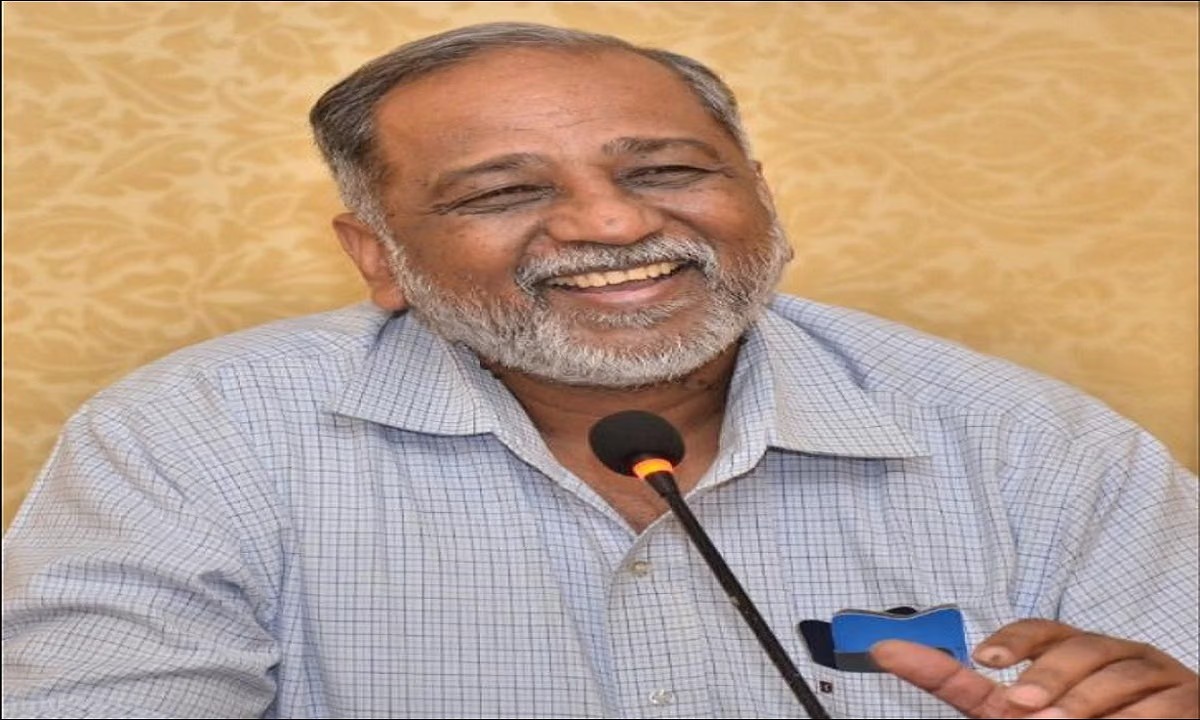
By Anil Jauhri is a former CEO of the National Accreditation Board for Certification Bodies and currently Visiting Fellow, Research and Information System for Developing Countries, a Ministry of External Affairs think tank
.
Disclaimer: This article is intended solely for general information and awareness and does not constitute professional advice, recommendation or endorsement; MedGate Today assumes no liability for decisions made based on its contents.