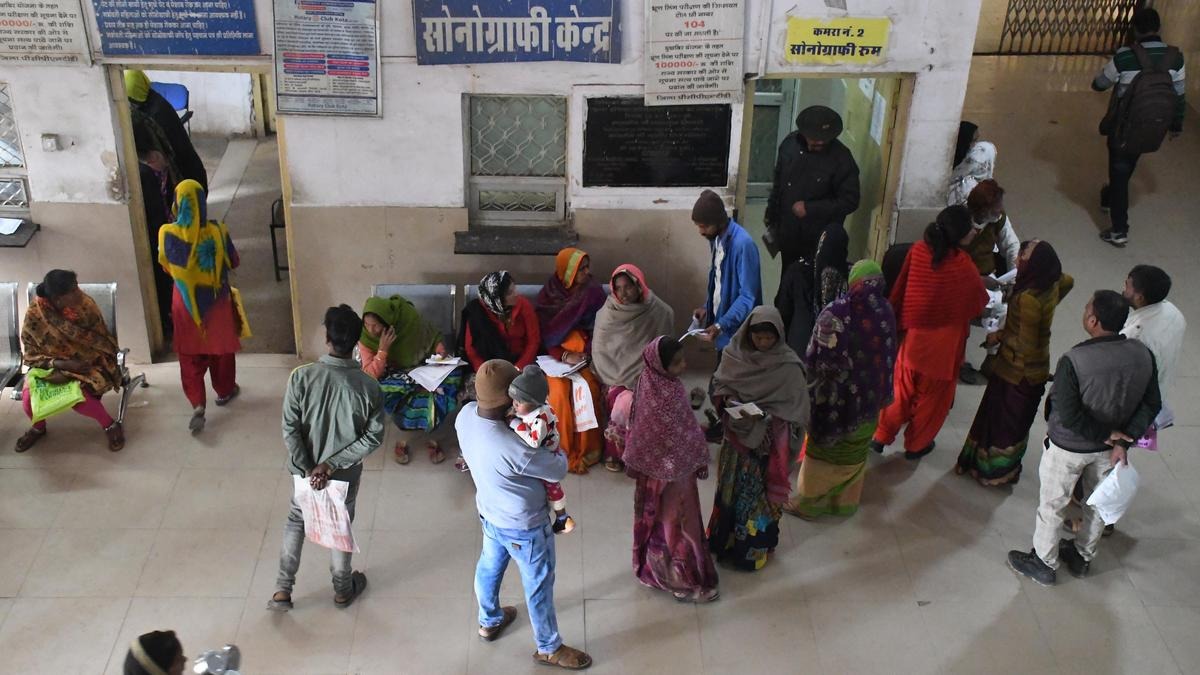

India must focus to build and scale home-grown tech solutions which can reach the last mile with efficiency and without compromising the quality of care
India stands at a pivotal moment in shaping digital health. With the digital health ecosystem projected to reach USD 40 billion by 2030, India is uniquely positioned to lead, innovate, and scale solutions that can

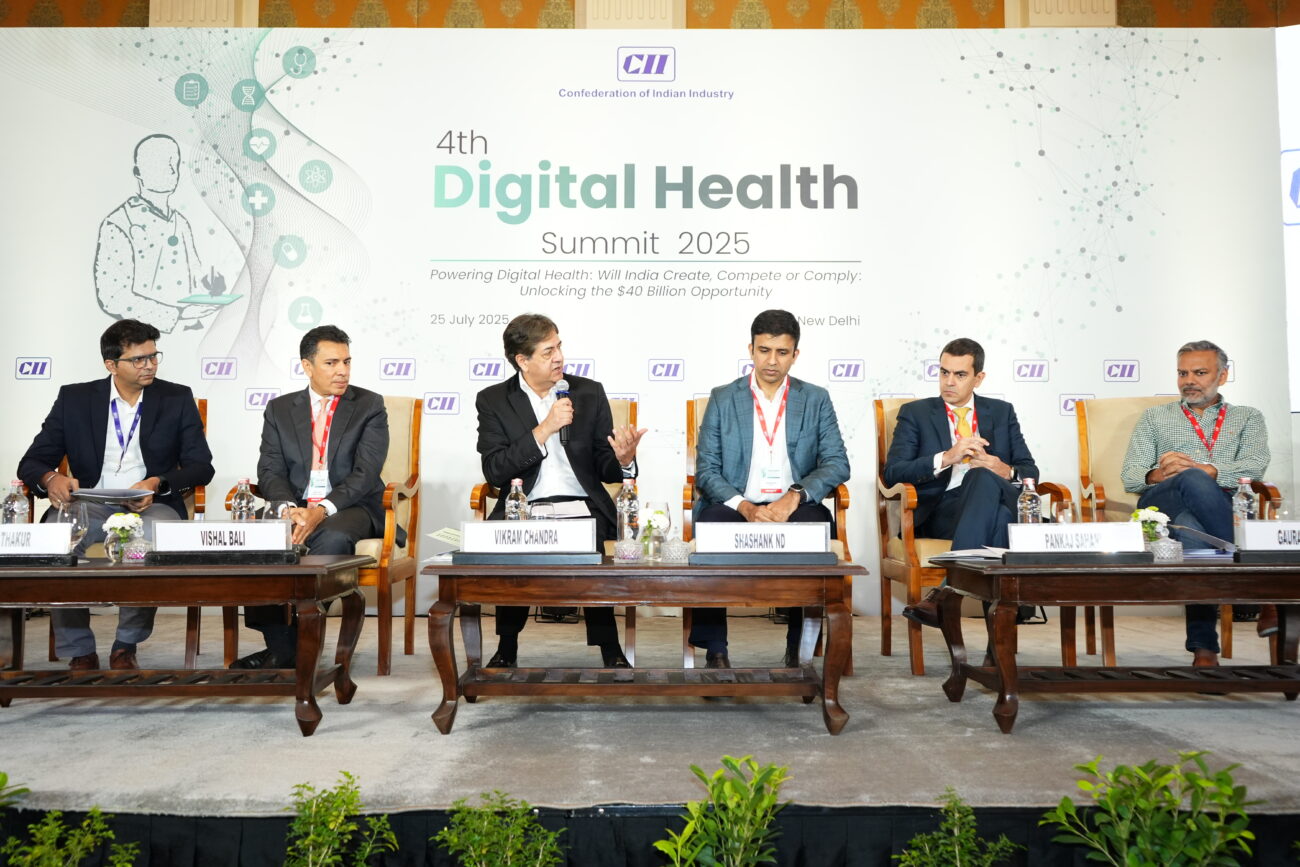
India stands at a pivotal moment in shaping digital health. With the digital health ecosystem projected to reach USD 40 billion by 2030, India is uniquely positioned to lead, innovate, and scale solutions that can redefine healthcare delivery, not just domestically, but globally.
Confederation of Indian Industry (CII) organized the 4th CII Digital Health Summit 2025 on 25th July 2025. Framed around the thought-provoking theme, “Powering Digital Health: Will India Create, Compete or Comply – Unlocking the $40 Billion Opportunity,” the summit served as a convergence point for visionaries from government, industry, academia, and startups to navigate India’s digital health trajectory and shape its role in the global health-tech arena.
The Summit delved into how India can move from being a follower to a frontrunner by creating world-class digital health products, competing on a global stage, and shaping rather than merely complying with international frameworks. Discussions spotlighted investment potential, policy enablers, and collaboration opportunities that can help India unlock a $40 billion digital health economy over the next decade.
Speaking on India’s remarkable digital transformation in the inaugural session, Mr S Krishnan, Secretary, Ministry of Electronics and Information Technology highlighted how India’s digital health achievements are influencing the care delivery in India and thus setting a leading example for global practices and standards. Mr Krishan, said, “India must focus to build and scale home-grown tech solutions which can reach the last mile enhancing efficiency and efficacy without compromising the quality of care”. He emphasised on the importance of continued multisectoral engagement to explore how the government, private sector, and research community can come together to drive this vision forward.
Dr Naresh Trehan, Chairman, CII Steering Group on Health and CII Healthcare Council, Chairman and Managing Director, Medanta – Medicity emphasized the ongoing technological revolution in healthcare, citing milestones like the CT scan and the widespread availability of monitors and ICUs even in smaller hospitals in India. Dr Trehan highlighted the rapid adoption of robotics and underscored the urgency of embracing new technologies to stay relevant in an evolving healthcare ecosystem. He said, “Continuous learning and unlearning will be critical, especially in the context of technology adoption, to embrace innovation and reimagine how we can leverage it to achieve universal health coverage and reach the last mile.”
“Transforming digital health requires us to prioritize quality and outcomes, align capital with performance, and foster innovation hubs that can drive meaningful change” said Mr Shashank ND, Co-chairman, CII National Committee on Health Technology and Chairman, CII Sub-committee on Digital Health & Co-founder and Chief Executive Officer, Practo. Speaking in favour of India’s readiness for global digital health leadership, Mr. Shashank highlighted the country’s expanding digital infrastructure, engaged user base, and vibrant innovation ecosystem which can be further accelerated by supportive regulations and improved market access.
Providing an overview of NITI Aayog’s Frontier Technologies Hub (FTH), Ms. Debjani Ghosh, Distinguished Fellow, FTH, NITI Aayog, highlighted the transformative potential of frontier technologies in driving disruptive shifts in healthcare. She emphasized the need to understand their implications for both industry, government and public, and to strengthen India’s preparedness for these shifts with the goal of increasing the lifespan with healthspan.
“Trust, inclusion, and scale have powered India’s digital health journey; the next phase is to scale with trust and purpose” – Ms Debjani Ghosh, Distinguished Fellow, Frontier Technology Hub (FTH), NITI Aayog
Mr. Vishal Bali, Executive Chairman, Asia Healthcare Holdings, stated, “India needs a unified vision for health that goes beyond curative care to fully integrate primary healthcare, something that Ayushman Bharat currently does not address.” He emphasized the need to simultaneously build capabilities to effectively meet the growing healthcare demands.
Highlighting the need for regulation in digital health technology in India, Dr. Rajeev Singh Raghuvanshi, Drugs Controller General of India (DCGI), Central Drugs Standard Control Organisation emphasized the importance of self-regulation by the industry. He said, “To advance digital health, we need more structured dialogues between innovators, investors, and regulators. Developed under the Guidance of NITI Aayog, Indian Council of Medical Research (ICMR) in partnership with Central Drug Standard Control Organization (CDSCO), MedTech Mitra is a strong example bringing stakeholders together through regular consultations. Scaling digital health will require more such collaborative platforms.”
Speaking on the potential of technology to transform care delivery, Mr. Madhukar Kumar Bhagat, Joint Secretary, Ministry of Health and Family Welfare, said, “Focus in health is universal coverage, and technology is a means to achieve this goal. AI for health should be purpose-driven, focusing on how it improves the four pillars of healthcare delivery – availability, accessibility, affordability, and quality of care.”
Mr. Kiran Gopal Vaska, Joint Secretary, National Health Authority (NHA), and Mission Director, Ayushman Bharat Digital Mission (ABDM), stressed on the importance of integrating regulatory compliance into the health delivery process from the outset, while ensuring that regulatory requirements remain transparent and standardized. He added that by digitizing the regulatory framework and enabling real-time monitoring, regulation can become a seamless part of digital health implementation, making scale-up both efficient and compliant.
Bringing Workplace Wellness to the fore, CII released a Report on “Workplace Health Reimagined: Corporate India’s Readiness for Digital Health Leadership”.
As India charts its path toward a digitally enabled healthcare future, the summit served as a catalyst for collaboration, innovation, and regulatory alignment.