
World Tuberculosis Day 2026: The road to a TB-free India
Dr. Pavan Yadav, Clinical Director & Senior Consultant – Interventional Pulmonology & Sleep Medicine, Associate Director - Lung Transplantation, KIMS Hospitals (Krishna Institute of Medical Sciences), Bengaluru Attributed to Dr. Pavan Yadav, Clinical Director & Senior

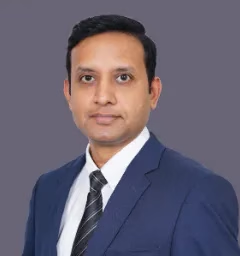
Dr. Pavan Yadav, Clinical Director & Senior Consultant – Interventional Pulmonology & Sleep Medicine, Associate Director – Lung Transplantation, KIMS Hospitals (Krishna Institute of Medical Sciences), Bengaluru
Attributed to Dr. Pavan Yadav, Clinical Director & Senior Consultant – Interventional Pulmonology & Sleep Medicine,
Associate Director – Lung Transplantation, KIMS Hospitals (Krishna Institute of Medical Sciences), Bengaluru
Every year on the 24th of March, World Tuberculosis Day is observed to remind the world of
the pressing need to eradicate one of the oldest infectious diseases. India’s fight against
tuberculosis assumes greater importance on this day. India accounts for the largest burden
of tuberculosis in the world.
The theme for the global fight against tuberculosis in 2026 is “Yes! We Can End TB! This
theme resonates very well with India’s fight against tuberculosis.
The challenge
Tuberculosis continues to infect millions of people in India every year. The reasons for this
are:
High population density and high population in urban centres
Malnutrition and poor living conditions
High prevalence of diabetes in India, which compromises the immune system
Social stigma attached to the disease
Tuberculosis is an airborne infection. This infection is spread when an infected person
coughs and sneezes. What makes tuberculosis particularly insidious is that in the initial
stages, the symptoms may not be very severe.
The hidden crisis: Underdiagnosis and stigma
One of India’s biggest challenges is missed or delayed diagnosis. Many individuals with a
persistent cough do not seek medical care due to lack of awareness or fear of social
isolation.
In several communities, TB is still associated with stigma, leading patients to hide their
condition or discontinue treatment midway. This not only worsens outcomes but also
increases transmission and the risk of drug resistance.
Rising concern: Drug-resistant TB
India is also grappling with an increasing number of cases of drug-resistant tuberculosis
(DR-TB), where antibiotics are unable to effectively treat the infection. This requires longer
treatment that may take up to 9-18 months. This treatment comes with several side effects.
Inadequate treatment, inconsistent adherence to medication, and the misuse of antibiotics
are some of the factors that have resulted in this issue. DR-TB treatment is an urgent priority
under the tuberculosis elimination strategy.
What is working: India’s multi-pronged strategy
India’s TB response has evolved significantly over the past decade, combining technology,
policy, and grassroots outreach. Key interventions include:
1. Active case finding: Health workers are increasingly conducting door-to-door
screening in high-risk areas, ensuring early detection rather than waiting for patients to
report symptoms.
2. Free diagnosis and treatment” Government facilities provide free TB testing and
medications, reducing the financial burden on patients. Rapid molecular diagnostic tools
have shortened detection time from weeks to hours.
3. Nutrition support: Through schemes like Nikshay Poshan Yojana, TB patients receive
financial assistance to improve nutrition—an essential factor in recovery.
4. Digital tracking: The Nikshay portal helps track patients, monitor adherence, and
reduce treatment dropouts through real-time data.
The road ahead
India has certainly made significant strides in the fight against tuberculosis. However, much
more needs to be done to completely eradicate the menace. The key areas to focus on
include:
Creating awareness to overcome the stigma attached to the disease
Ensuring early detection in rural areas
Ensuring complete compliance with treatment regimens
Making newer regimens with shorter durations of treatment accessible to all
A collective responsibility
The struggle against tuberculosis in India is not only a health challenge; it is a challenge to
society as a whole. Everyone, from policymakers to healthcare workers to people at the
grassroots level, has a part to play.
World Tuberculosis Day 2026 is a timely reminder that tuberculosis is not only curable,
preventable, and eliminable; it will be done only when awareness translates into action.