
Bai Jerbai Wadia Hospital Leads the Care of Children with Rare Diseases, Hosts Unique Patient Support Group program for 10 different rare diseases
Rare diseases affect 1 in 10,000 to 200,000 children. Certain conditions are rare, like Congenital Hyperinsulinism, which occurs in 1 in 100,000 children, while Cystic Fibrosis affects approximately 1 in 10,000 to 40,000 children globally As

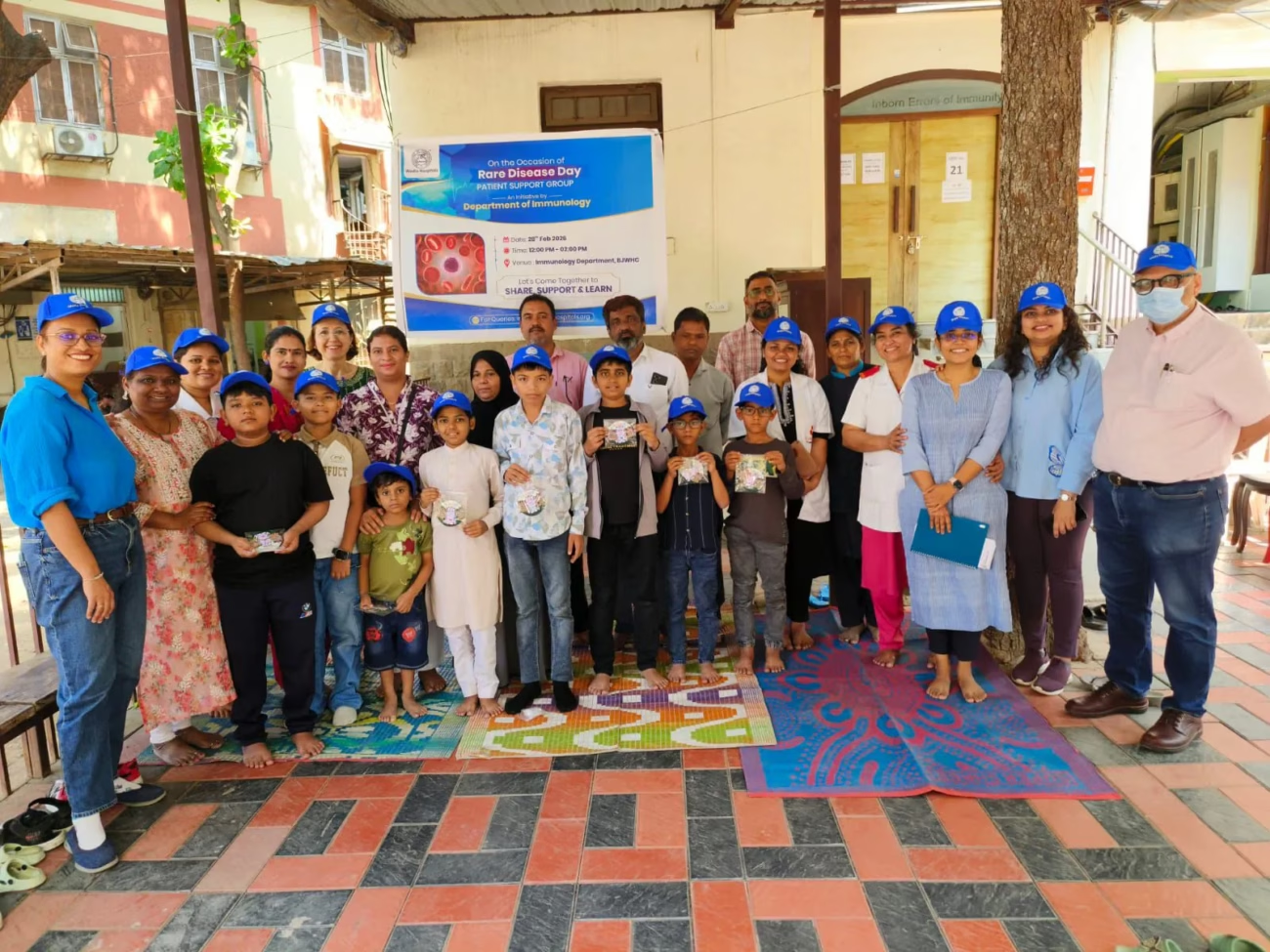
Rare diseases affect 1 in 10,000 to 200,000 children. Certain conditions are rare, like Congenital Hyperinsulinism, which occurs in 1 in 100,000 children, while Cystic Fibrosis affects approximately 1 in 10,000 to 40,000 children globally
As a leading tertiary care pediatric referral centre, the hospital provides diagnostic facilities, comprehensive care, advanced transplant facilities, and long-term follow-up support for affected children.
To commemorate Rare Disease Day, Bai Jerbai Wadia Hospital for Children took a meaningful and compassionate step by organizing a special Patient Support Group Program for children affected by rare diseases. Ten different rare diseases belonging to 10 different Pediatric Speciality departments conducted insightful discussions and interaction sessions to guide families and spread awareness about ongoing care and treatment options. The event was graced by Padma Shri awardee Dr Armida Fernandez, as the Chief Guest, alongside Dr Sudha Rao, Medical Director, and Dr Pradnya Bendre. Over 100 children, along with their parents, attended the program, making it a powerful platform for shared experiences, expert guidance, and emotional support.
During the Patient Support Group meeting, 10 departments of the hospital conducted individual events to share their expertise and guide families. Specialists from Pediatric Cardiology spoke about Cardiomyopathy, Immunology experts discussed Agammaglobulinemia, and the Genetics team explained Inborn Errors of Metabolism. The Pediatric Nephrology department addressed Atypical Hemolytic Uremic Syndrome, while Pulmonology specialists interacted with children with Cystic Fibrosis. The Hematology-Oncology and Bone Marrow Transplant team discussed Fanconi Anemia, and the Endocrinology department explained Congenital Hyperinsulinism. The Neurology department conducted a session on genetic epilepsy syndromes. The gastroenterology and hepatobiliary surgery team interacted with a group of children with tyrosinemia and Wilson disease, and children who had undergone liver transplant. Each session focused on early diagnosis, treatment options, long-term care, and the importance of regular follow-up, helping parents to better understand and manage their child’s condition.
Dr Sudha Rao, Medical Director, Bai Jerbai Wadia Hospital for Children, said, ” Rare diseases affect nearly 1 in 10,000 to 200,000 children. There are 7000 or more rare diseases identified, which need early diagnosis and treatment. Some conditions are rarer, like Congenital Hyperinsulinism, which occurs in about 1 in 100,000 children, where babies are born with very low blood sugar due to excess insulin production and require lifelong monitoring and treatment. Cystic Fibrosis, another serious inherited condition affecting the lungs and digestive system, occurs in approximately 1 in 10,000 to 40,000 children globally.
As part of the Department of Endocrinology, Dr Sudha Rao conducted a session on Congenital Hyperinsulinism. So, children with this condition are born with low blood sugar (neonatal hypoglycemia) due to excess insulin production. She explained that these children require lifelong medication, regular injections, and continuous monitoring to maintain safe sugar levels. She further explained that children with Congenital Hyperinsulinism and many other rare diseases are receiving care at the Hospital.
Dr Sudha Rao further added, ” Bai Jerbai Wadia Hospital For Children is fully equipped to diagnose and treat all types of rare diseases. The Hospital serves as a leading tertiary referral centre for rare diseases in children. Children from across the country are referred here for expert diagnosis and advanced treatment. The hospital provides comprehensive care starting from early identification, testing, including molecular genetic testing, to advanced medical management and structured long-term follow-up. Backed by advanced facilities such as bone marrow, kidney, and liver transplant programs. The hospital is committed to giving every child with a rare disease hope for a healthier future. Dr Pradnya Bendre, Professor and Chief Pediatric Solid Organ Transplant Program, said the hospital is committed to giving every child with a rare disease the hope for a cure and a healthier future.
Dr Minnie Bodhanwala, CEO of Bai Jerbai Wadia Hospital for Children, said “Rare diseases require not only clinical expertise but also sustained institutional dedication. We are consistently upgrading our infrastructure, technology, and specialist services to ensure children with rare conditions receive the highest standard of care. Programs like this Patient Support Group demonstrate our commitment to combining medical excellence with emotional and community support for families.”
Padma Shri awardee Dr Armida Fernandez, the neonatologist who established Asia’s first human milk bank in 1989 appreciated the unique Patient Support Group initiative taken by the Hospital. She said she was deeply moved to witness such a compassionate support group for rare diseases.