
The growing need for policy recalibration in India’s public private healthcare model
Leading private hospital chains in India are reportedly re evaluating their involvement in government health insurance schemes, with major players like Max Healthcare, Narayana Health, Fortis Healthcare, and HealthCare Global facing increasing financial and operational

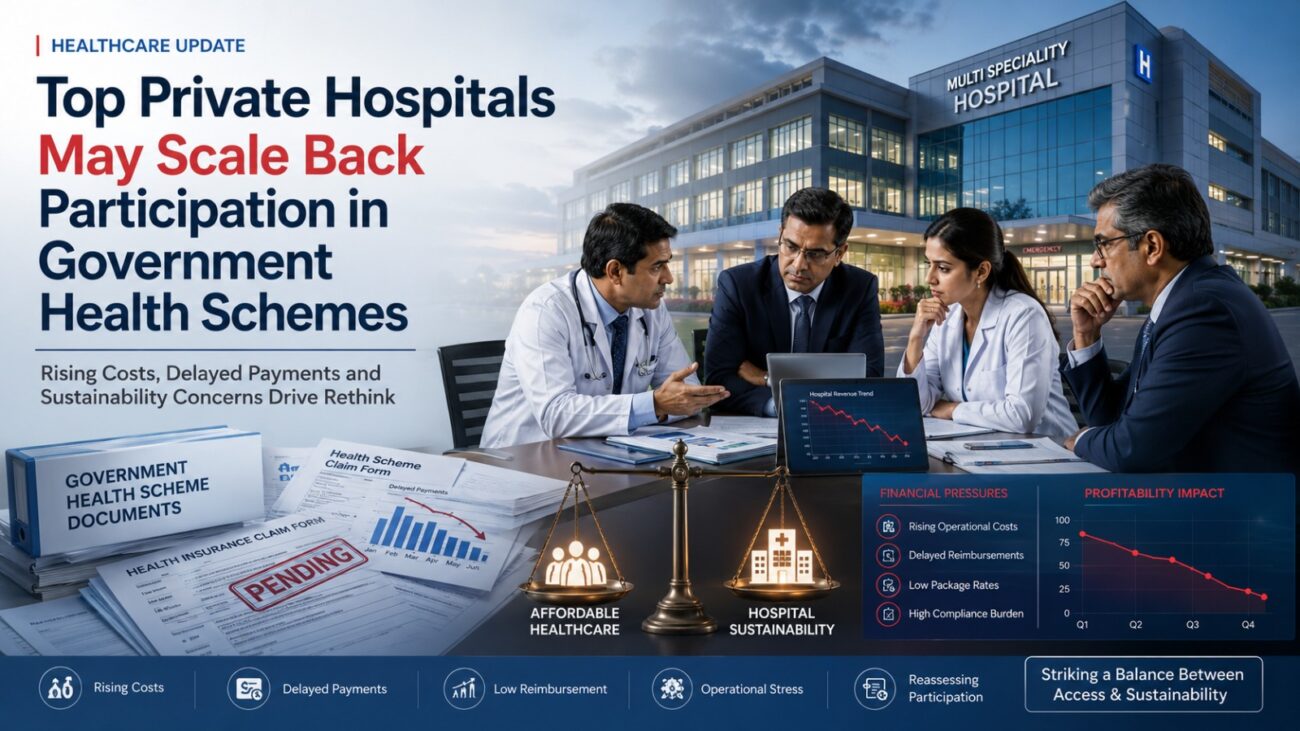
Leading private hospital chains in India are reportedly re evaluating their involvement in government health insurance schemes, with major players like Max Healthcare, Narayana Health, Fortis Healthcare, and HealthCare Global facing increasing financial and operational pressures.
While no hospital group has formally announced withdrawal from government programmes, industry discussions indicate that reimbursement delays, fixed treatment package pricing, and rising treatment costs are creating significant strain on revenue models.
Revenue Stress and Key Challenges
Private hospitals are increasingly highlighting structural issues in government backed healthcare schemes, particularly in high cost specialties such as oncology, cardiology, and critical care.
Key concerns include:
● Delayed reimbursements affecting hospital cash flow cycles
● Fixed package rates not aligned with rising medical costs
● Higher operational expenses in advanced treatments and ICU care
● Administrative burden in claims processing and approvals
Industry estimates suggest that:
● Government scheme patients account for 15%–25% of admissions in major private hospital chains (varies by specialty and location)
● Reimbursement delays can range from 30 to 120 days, depending on the scheme and state system
● Hospital operating margins in government scheme cases are often 5%–10% lower than private insurance or self paying patients
Financial Impact on Hospital Chains
Healthcare operators have indicated that regulated pricing under government programmes often does not fully cover the cost of advanced procedures. This gap is particularly visible in Cardiac surgeries, interventional procedures, Cancer treatments involving high cost drugs, therapies Intensive care and emergency trauma services.
Role of Government Health Schemes
Government backed health insurance programmes have significantly expanded healthcare access in India, covering millions of economically weaker families annually.
It includes –
● Cashless treatment access for eligible beneficiaries
● Coverage across secondary and tertiary care procedures
● Large scale hospital empanelment across public and private sectors
However, hospital associations argue that
● Package rates are not regularly revised to match inflation in healthcare costs
● High end medical technology costs are not fully accounted for in reimbursement structures
● Payment delays impact hospital liquidity and expansion planning
Possible Impact on Healthcare Access
Experts warn that any reduction in participation by private hospitals could have wider implications, including:
● Reduced access to advanced tertiary care for low income patients
● Increased burden on government hospitals and public healthcare systems
● Longer waiting times in high demand specialties
At the same time, hospitals are expected to continue participation in most government schemes due to:
● High patient volumes
● Strategic importance of public healthcare partnerships
● Regulatory and accreditation requirements
Outlook
The development highlights the growing need for policy recalibration in India’s public private healthcare model. Experts suggest that improvements in reimbursement timelines, periodic revision of treatment packages, and streamlined claim processing could help strengthen participation from private healthcare providers.
As healthcare demand continues to rise across India, balancing affordability for patients with financial sustainability for hospitals remains a critical policy challenge going forward.